Why change your car’s air filter?

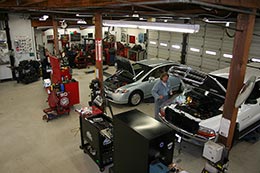
The air filter stops airborne contaminants from getting sucked into your car’s engine.  It is a paper filter that stops debris before it gets inside the engine and does any damage.  We recommend that you change your air filter regularly to prevent it from becoming completely plugged.   If this happens, your car will lose power, run roughly and waste fuel.  It may also cause your check engine light to come on.


Posted in Uncategorized | Leave a comment

Looking for an Automotive Technician

We are still looking for a qualified auto technicican.  If you know someone send them our way and if we interview them you will receive $100 cash and dinner for two at the 42nd Street Cafe.

Posted in Uncategorized | Leave a comment

11 car-care tips that save gas

Fill up with a lower-octane gasoline. Buy the lowest grade or octane of gasoline that is appropriate for your car. Unless your car requires premium gasoline, filling up your car with high-octane fuel is a waste of money. That pricey premium fuel won’t boost your car’s fuel economy or performance in the least, so skip it.

If you’re not sure what grade of fuel works best for your car, open up your owner’s manual and take a look. As long as your engine doesn’t knock or ping when you fuel up with regular unleaded, you’re good to drive on this much cheaper gas. Passing on pricey premium gasoline could save you hundreds of dollars a year.

Don’t top off. Don’t bother topping off when filling your car’s gas tank. Any additional gas is just going to slop around or seep out. Why waste your money paying for gas your car won’t use? Stop pumping at the first indication that your tank is full when the automatic nozzle clicks off.

Tighten up that gas cap. Gas will evaporate from your car’s gas tank if it has an escape. Loose, missing or damaged gas caps cause 147 million gallons of gas to evaporate each year, according to the Car Care Council. So be sure to tighten up that gas cap each time you fuel up your car.

Go for the shade. The hot summer sun that makes the inside of your car feel like a sauna also zaps fuel from your gas tank.

“If you let your car bake in the sun there’s going to be a greater amount of evaporative emissions that take place than if you park in the shade,” says Jim Kliesch, research associate at the American Council for an Energy-Efficient Economy and vehicle analyst for GreenerCars.com.

So park your car in the shade of a building or tree whenever possible. And buy a good windshield shade. A windshield shade blocks sunlight and helps to keep heat out of the inside of your car.

Use your garage for your car. Got a garage? Clear it out and make room for your car. Parking in your garage will help your car stay warm in winter and cool in summer, and you won’t have to depend as much on your gas-guzzling air-conditioning or defroster when you drive.

Pump up your tires. Don’t get caught driving on underinflated tires. Underinflated tires wear down more quickly and they also lower your car’s gas mileage.

“Tires that have low pressure offer more resistance so the engine is going to work harder to keep the car at 60,” says Brian Moody, road test editor at Edmunds.com.

Your car’s gas mileage may plummet by as much as 15 percent. Driving on underinflated tires may also reduce the life of your tires by 15 percent or more.

Check your tire pressure once a month. Buy a digital gauge and keep it in your glove box. Compare the pressure in your tires with the recommended pressure listed in your owner’s manual and on the placard in your car door. Then inflate your tires as needed. Be sure to check tire pressure when your tires are cold. A good time is early in the morning after your car’s been idle overnight.

Keep your engine in tune. Fixing a car that is out of tune or has failed an emissions test can boost gas mileage by about 4 percent. So be sure to give your car regular tune-ups. You’ll also want to watch out for worn spark plugs. A misfiring spark plug can reduce a car’s fuel efficiency by as much as 30 percent.

Replace air filters. Keep a close eye on your engine’s air filter. When the engine air filter clogs with dirt, dust and bugs, it causes your engine to work harder and your car becomes less fuel-efficient. Replacing a clogged air filter could improve your gas mileage by as much as 10 percent and save you 15 cents a gallon. It’s a good idea to have your engine air filter checked at each oil change. The Car Care Council recommends changing your car’s air and oil filters every three months or 3,000 miles or as specified in your owner’s manual.

Use the right oil. You can improve your car’s gas mileage by 1 percent to 2 percent by using the manufacturer’s recommended grade of motor oil. Opt for motor oil with the words “energy conserving” on the API performance label. This oil contains friction-reducing additives.

Don’t skimp on maintenance. Be serious about auto care. Your car’s performance depends on it.

“Always follow the manufacturer-recommended maintenance,” Moody says. “The car’s designed to run a certain way. If you neglect it, it won’t be as efficient.”

 @http://www.bankrate.com/brm/news/auto/fuel-efficient/5.asp

Posted in Uncategorized | Leave a comment

Auto Maintenance on a Budget

http://www.asashop.org/tips/care.htm

Automotive Maintenance
on a Budget

Provided by the Automotive Service Association

The following simple and inexpensive preventive inspections may extend the life of your vehicle, ensure safer operation and even benefit the environment.

      Even though your vehicle may still be under warranty you are not required to return to a dealership for scheduled maintenance. You may have the service facility of your choice maintain your vehicle and not void your warranty.

      Always refer to the manufacturer’s specifications in your vehicle owner’s manual, but a good rule of thumb is to have the oil and filter changed regularly, every 3,000 to 4,000 miles when using conventional engine oil and every 5,000 to 6,000 miles when using synthetic engine oil.

      Have all fluids inspected, including brake, power steering, transmission/transaxle, windshield washer solvent and antifreeze/coolant. These fluids play a vital role in the safety and performance of the vehicle.

      Inspect tires and inflation once a month. Under-inflated tires can result in a loss of fuel efficiency and premature tire wear. This is the least expensive form of preventive and safety maintenance.

      Keep your engine tuned. A fouled spark plug can reduce fuel efficiency as much as 30 percent.

      Have the chassis lubricated frequently. This step extends the life of the moving components of the vehicle’s suspension system.

      Inspect battery, cables and posts for corrosion and clean as needed.

      Have the lighting system inspected frequently, including headlights, turn signals, brake lights and tail lights.

     Inspect windshield wiper blades for cracks, tears and windshield contact. Replace them at least once a year or sooner if streaking begins.

      Inspect engine belts and hoses regularly. Look for wear, cracks and missing sections or segments. Worn belts and hoses can affect the safe operation of your vehicle.

      Have the air filtration system inspected frequently. The air filter should be inspected approximately every other oil change for clogging or damage.

      Inspect and replace your vehicle’s cabin air filter regularly. The cabin air filter cleans the air to the heater and A/C system and affects the air you breathe while driving your vehicle.

Always consult your vehicle owner’s manual for individual service schedules as manufacturer maintenance requirements may vary greatly.

Courtesy: Automotive Service Association

Posted in Uncategorized | Leave a comment

Looking for auto technician

We are offering dinner for two at the 42nd Street Cafe and $100 cash to the person who sends us a qualified auto technician.

Posted in Uncategorized | Leave a comment

Gas Saving Tips!

Don’t top off. Don’t bother topping off when filling your car’s gas tank. Any additional gas is just going to slop around or seep out. Why waste your money paying for gas your car won’t use? Stop pumping at the first indication that your tank is full when the automatic nozzle clicks off.


Tighten up that gas cap. Gas will evaporate from your car’s gas tank if it has an escape. Loose, missing or damaged gas caps cause 147 million gallons of gas to evaporate each year, according to the Car Care Council. So be sure to tighten up that gas cap each time you fuel up your car.


Go for the shade. The hot summer sun that makes the inside of your car feel like a sauna also zaps fuel from your gas tank.

“If you let your car bake in the sun there’s going to be a greater amount of evaporative emissions that take place than if you park in the shade,” says Jim Kliesch, research associate at the American Council for an Energy-Efficient Economy and vehicle analyst for GreenerCars.com.

So park your car in the shade of a building or tree whenever possible. And buy a good windshield shade. A windshield shade blocks sunlight and helps to keep heat out of the inside of your car.


Use your garage for your car. Got a garage? Clear it out and make room for your car. Parking in your garage will help your car stay warm in winter and cool in summer, and you won’t have to depend as much on your gas-guzzling air-conditioning or defroster when you drive.


Pump up your tires. Don’t get caught driving on under inflated tires. Under inflated tires wear down more quickly and they also lower your car’s gas mileage.

“Tires that have low pressure offer more resistance so the engine is going to work harder to keep the car at 60,” says Brian Moody, road test editor at Edmunds.com.

Your car’s gas mileage may plummet by as much as 15 percent. Driving on under inflated tires may also reduce the life of your tires by 15 percent or more.


Check your tire pressure once a month. Buy a digital gauge and keep it in your glove box. Compare the pressure in your tires with the recommended pressure listed in your owner’s manual and on the placard in your car door. Then inflate your tires as needed. Be sure to check tire pressure when your tires are cold. A good time is early in the morning after your car’s been idle overnight.


Keep your engine in tune. Fixing a car that is out of tune or has failed an emissions test can boost gas mileage by about 4 percent. So be sure to give your car regular tune-ups. You’ll also want to watch out for worn spark plugs. A misfiring spark plug can reduce a car’s fuel efficiency by as much as 30 percent.


Replace air filters. Keep a close eye on your engine’s air filter. When the engine air filter clogs with dirt, dust and bugs, it causes your engine to work harder and your car becomes less fuel-efficient. Replacing a clogged air filter could improve your gas mileage by as much as 10 percent and save you 15 cents a gallon. It’s a good idea to have your engine air filter checked at each oil change. The Car Care Council recommends changing your car’s air and oil filters every three months or 3,000 miles or as specified in your owner’s manual.


Use the right oil. You can improve your car’s gas mileage by 1 percent to 2 percent by using the manufacturer’s recommended grade of motor oil. Opt for motor oil with the words “energy conserving” on the API performance label. This oil contains friction-reducing additives.


Don’t skimp on maintenance. Be serious about auto care. Your car’s performance depends on it.

“Always follow the manufacturer-recommended maintenance,” Moody says. “The car’s designed to run a certain way. If you neglect it, it won’t be as efficient.”

Obey the car-care guidelines outlined in your owner’s manual

Posted in Uncategorized | Leave a comment

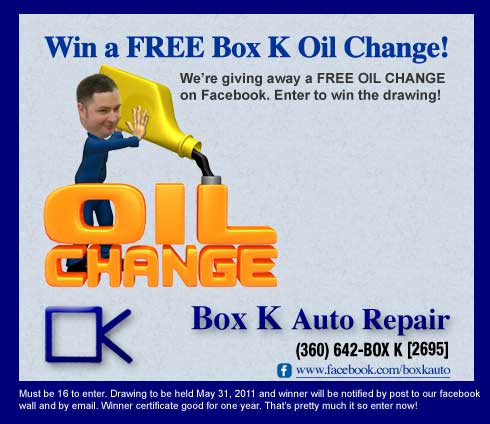
WIN A FREE OIL CHANGE!

It is simple just LIKE us on facebook then click the sign up and win link on the left of our page under our profile picture. Please tell your friends & good luck!

You must like the page to win!


Posted in Uncategorized | 1 Comment

GPS tracking shows traffic congestion returning after recession


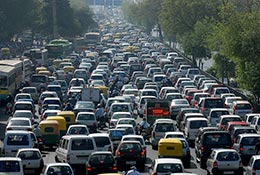
Want to know how the economy’s doing? Look at the roads. Inrix Corp compiles data from the GPS units in people’s cars they say that traffic congestion has increased 10 percent in 2010 compared with 2009. But traffic is still 27 percent off its pre-recession peak in 2007.Inrix rates congestion in what it calls the “travel time tax,” a measure of how much longer it would take to travel a given route in traffic than it would when there is no congestion, such as in the middle of the night. The company found that the travel time tax amounted to more than 80 hours annually of delays in peak evening travel times for some commuters. Some commuters in the 10 worst travel corridors are on track to spend an entire month per year stuck in traffic, according to the report. Most congestion is in the evening hours on roads the Federal Highway Administration dubs “Urban Interstates.”The study highlights some trends that commuters could take as useful tips: The worst traffic of the week is on Friday nights between 5 and 6 p.m. Evening rush hour on Thursdays and Fridays occurs about 15 minutes earlier than on other days of the week, peaking between 5:15 and 5:30 p.m.Tuesdays are the busiest mornings, beating out Wednesdays in previous years.                                                                                                                                            Morning congestion peaks between 7:45 and 8 a.m.                                                    Congestion in 2010 was higher during every hour of the week – except for a small decrease on Saturday evenings.                                                                                                                     Even weeknight traffic in the middle of the night increased as the result of more roadwork. Based on the study, Inrix expects traffic delays to be back to record levels in 2011.          Lets not take for granted those of us who work and live on the Peninsula wont have to worry about spending a month out of our year in traffic.

Posted in Uncategorized | Leave a comment

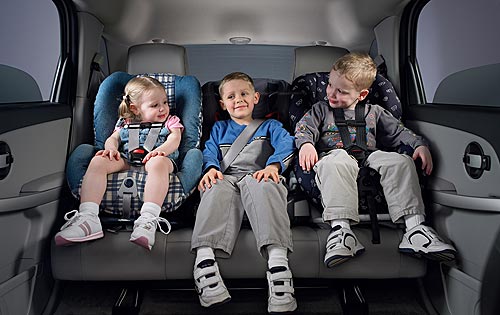
Road Trip Activities & Travel Games for Children


Its that time of year we may be planning a road trip. Rather than having the kids plugged in the whole trip how about some car games.

Give your kids an allowance for the day.
Tell them that this money is for snacks, treats, souvenirs etc… but when it is gone, that is all there is. Help them learn to budget their money and make good choices.

Let your children have a map

Give your kids an opportunity to have their own copy of a map of where you are going. Show them how far you have come, how much further there is to go and let them mark it with a crayon. Every time they ask “How much further?” have them take out their map and see for themselves. You might also like to get a compass and show them how it works along with the map.

Also kids who are old enough to read can help navigate with Travmatix. You can use this site to print driving directions along with a list of all the food, fuel and hotel options at every exit along your route. When they start getting hungry or need a break, have them check the list of what is available at upcoming exits!

MAKE a “map” of where you are going.
Draw your own that has the major stops and cities, and a nice happy drawing for your final destination. Throw in a few simple drawings of landmarks you’ll see along the way, such as a big bridge you’ll or a mountain tunnel. A home made map is easy for kids to follow and gives them a clearer picture of how much further there is to go. If your kids are old enough and it’s a trip that you take frequently, have the kids make their own map!


Have bubble gum blowing contests
The weirder the gum the better. Get it at the rest areas and try all the different flavors.

The License Plate Game
Print a U.S. map off the computer and color in the states as you see license plates from each one.  See if you can get all 50 states between Memorial Day and Labor Day. You might even record the time and date and the state where you saw it. This can be a family project as you build your “collection” of license plates together.  Here’s a collection of printable maps you can use for this game, or a simple List of the States to check off. Check out my article on the License Plate Game

Odd or Even

Game for two players – Have each child guess if there are more license plates that end in an odd or even number.  (plates that end in a letter do not count)  
1.  Give each child a blank sheet of paper and a pencil, or something to mark with.
2.  Set a time limit, usually 10-15 minutes.
3.  Have one child look for plates that end in an odd number, and the other look for an even number.
4.  A tick mark or dash should be marked for each car they find. (For extra learning, have them group the marks in sets of 5)
4.  At the end of the time limit, have the children add up their marks. (Counting by 5′s if grouping was used)

What did I bring on my Trip?

Start this game out by saying, “I’m going on a trip and I’m bringing…” .  The first player should name an item that starts with the letter “A”.  After “A” , the next player will say the same thing but with the letter “B”, and so on.


Posted in Uncategorized | Leave a comment

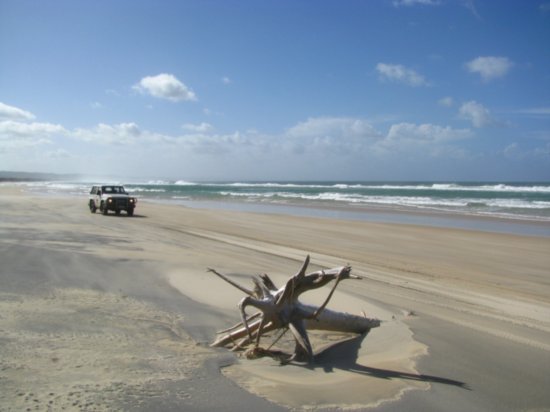
Tips for Beach Driving


  • When pulling onto the approach road you should decrease the air pressure in your tires to 20-25 pounds. When you lower the air pressure it gives the tire a wider, softer footprint enabling the vehicle to ride higher on top of the sand instead of digging down into it. This also helps to reduce the amount of strain on the engine since you’re rolling on top of the sand and not plowing through it.
  • When driving through the softer sand between the approach road and the hard packed beach, do not stop. Drive at a slow, even pace. The maximum speed limit is 25 MPH. Accelerating too quickly will cause loss of traction and bury you to the axle. If this happens, it’s time to break out the jack and shovel.
  • Try to stay in the ruts made by other vehicles unless they are so deep you bottom out. The sand in these ruts is more compacted than other sand.
  • Stay on the hard pack. This soft sand is the Peninsula’s version of quick sand, and driving in it is a fair guarantee you will bury your car to the axel.
  • If you do get stuck beyond your ability to pull yourself out, expect tow fees to be at least $100.
  • Stay out of the clam beds (the softer sand close to the water line). This preserves our clams and ensures more recreational dig dates available each year. (It also keeps you from getting a ticket!)
  • Watch the tides! Don’t get trapped on the wrong side of areas of the beach that are impassable at high tide.
  • If you can do so without going into the sugar sand, park above the high tide line.
  • In the event that you do lose traction, DO NOT spin your wheels to try to dig out of it. It only takes a couple of pumps on the gas to sink you down to your axle. The best solution is to decrease your tire pressure, shift to low range and back out of the rut you came in on before trying to proceed.
  • Always watch for pedestrians, animals and sunbathers. And remember, beach debris cannot be trusted to stay put. Sneaker waves can lift perfectly stable looking logs and move them quite a distance in just a few moments.
  • Give the underside of your vehicle a good freshwater rinse when you come off the beach to remove corrosive sand and salt.
Posted in Uncategorized | Leave a comment